
IPT-k
IPT-k (Integrated Psychological Therapy-cognitive training) is a group intervention for people with cognitive impairments.
Training to become a group leader in IPT-k is offered as a two-day course, either on-site in a physical location in the traditional way or as digital training. We have extensive experience with both forms of training.
📒 The program is manual-based and integrates cognitive and social training. It is given in groups of 4-7 participants, led by two group leaders.
IPT-k is a group activity that both participants and group leaders usually find fun and enjoyable! Many of the exercises are reminiscent of board games and play, but without competition or comparison with other participants.
🆘 There is strong research support for the effect of IPT-k on cognitive function. The studies have been conducted on people with psychotic disorders. Read more about this on the Socialstyrelsen (Swedish National Agency for Social Welfare) page about IPT-k , which also refers to Abrams Utbildning as a training provider.
The method has a priority score of 2 out of 10 in the National Guidelines of the Swedish Social Services Agency (2018), which states that healthcare and municipal social services should offer the intervention to people with severe cognitive impairments.
✏️ IPT-k is perfectly suited as a structured activity in residential care facilities and activity centers, outpatient clinics and wards. When conducted within healthcare by qualified healthcare professionals, it constitutes a treatment intervention. However, the exercises are of a general nature and the program can be arranged as a training activity at, for example, residential facilities within social services, activity centers or within interest groups.
Material
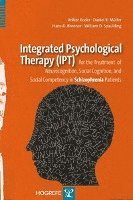
There is a comprehensive manual in German, which has been translated into English (1) . To facilitate reading of the manual, a reading guide (below) is available for free download and serves as a "mini-manual". It describes the different sub-programs and how to perform the individual exercises.
Further down the page you will find the materials needed to complete the exercises. The files can be submitted to a printer for ordering.
It can also be ordered as a "semi-finished" package from Abrams Education. In that case, the actual material is of printing-quality cardboard and thick paper, but it is delivered in A4 format that you need to cut or tear apart yourself.
Although the material is partly self-instructional, it is recommended to participate in an IPT-k training course in preparation for starting a group.
Download the files here.
Reading instructions with guidance (Abrams, D)
Research on IPT-k