
Theory, research and results
Interactive Treatment is a practical method rooted in psychological research, educational theory and proven experience. The methodology is designed to work in real-life situations and is based on concepts, principles and methods that have been established and evaluated in several different contexts. The various components that make up Interactive Treatment are themselves empirically researched, such as the use and interpretation of body language, the effects of listening, validation, clarifying techniques, role modeling, tit-for-tat (game theory) and many other examples.
A practical model – with psychological roots
Interactive Response is not a manual, but a model of action . It helps you think structuredly in situations where much is at stake. The model has been developed in collaboration with staff in psychiatry, social services and functional support – and has been shaped by what actually works when cooperation fails.
The methodology is based on ideas from several psychological traditions:
🔹 Motivational interviewing (MI) – co-creative conversations with a focus on will and ability
🔹 Cognitive behavioral therapy (CBT) – the connection between thought, feeling and action
🔹 Thomas Gordon's communication pedagogy - active listening, I-messages and division of responsibility
🔹 Social learning theory (model learning) – learning through role models and concrete practice
🔹 Conflict theory and game theory (e.g. tit-for-tat) – how our responses affect the direction of the conflict
All of this is not conveyed as abstract theory – but as tangible tools in teaching.
Research and publications
The methodology has been described in several publications, including:
📘 A chapter in the book Mental disabilities – support and help with cognitive disabilities (Student literature, 2012)
📄 A research study published in 2024 in the Journal of Psychiatric and Mental Health Nursing , University of Gothenburg/Sahlgrenska
📗 A standalone e-book (Abrams, 2022) on the basics of Interactive Communication – available for free
Results in practice
Interactive Response is not only well-founded – it has also produced concrete effects in real-world operations. An example:
🔷 Sahlgrenska University Hospital, ward 242
A psychiatric ward where IB was consistently applied reported a period of six months without coercive measures – despite over 90% of the patients being cared for under the LPT (Law on Compulsory Psychiatric Care).
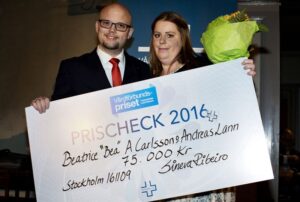
For this work, the unit was awarded the Swedish Healthcare Association's second prize in 2016 for the introduction of person-centered care. Interactive Treatment was the concrete approach in patient contacts – what made everyday life work.
Adapted for complex situations
IC is particularly useful in working with:
🔹 People with cognitive disabilities
🔹 Psychiatric symptoms that affect relationships and interactions
🔹 Limited insight, suspiciousness or affective problems
🔹 People who don't want to – or can't – follow normal routines
The method helps you find an approach that is both professional, understandable and possible to implement – even when conversational methods are not enough.
Ethics and treatment
The basic idea of the method is simple:
Achieving consensus is winning.
And it is better to create a joint decision than to force a yes.
IC encourages clarity, responsibility and respect – even in asymmetrical relationships where roles are different. By focusing on what we actually say and do in critical moments, we gain an ethical approach that can be practiced.
🔜 Next page: What do the participants say? →